Tyler’s Torah Thoughts for 25 Nisan, 5785
Day 10 of the Omer
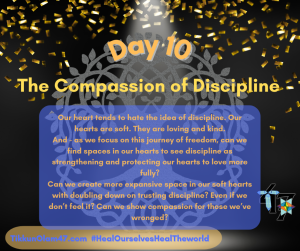
Today’s Omer is about the “Compassion of Discipline”
We are asked to consider “why?” Why did we build these structures of discipline in our life? Our focus? Is the motive fear (I exercise because I am afraid I won’t be attractive and no one will love me)? Or is the motive compassion (I want to be kind to my body, and working the muscles gives my body opportunity to live out it’s purpose. Those muscles don’t often get a chance to flex – so I want to flex them)?
That is a beautiful example of the compassion of discipline (in my opinion).
Am I focused on self-love because I see myself as broken and need to be fixed? Or am I focused on self-love because the more I see who I am, the more I want to know who I am?
This is all about our motive for discipline.
What is your discipline? What is your motive?
My thoughts from last year:
Alright, we are caught back up. Tomorrow, we will finish out the final portion of the Parsha – ‘Aharei Mot.
Today, lets focus on one more aspect of the Omer. The compassion of discipline.
From Chabad:
Not just love but compassion has to drive discipline. Love comes from recognizing one’s merits and positive qualities (discipline channels and directs those strengths and weeds out the negative). Compassion is unconditional love. It is love just for the sake of love, not considering the others position. Tiferet is a result of total selflessness in the eyes of G‑d. You love for no reason; you love because you are a reflection of G‑d.
Does my discipline have this element of compassion?
Exercise for the day: Be compassionate to someone you have reproached.
I reflect on our motives. Why do I set up structures of discipline in my life? Is it out of compassion and love? Or is it out of fear? Am I afraid that if the structure goes away, I will fail and fall? Or do we understand the structure of discipline is a reflection of love and is soft and pliable too?
I am also unpacking forgiveness within. I hold onto guilt and shame over how I have treated others – both intentionally and unintentionally – that I sit in this moment and I just didn’t like how I showed up.
When setting up my structures – do I choose to engage in behaviors that normalize my past guilt and shame – covering them up so I am numb or distracted? Or – like I will post later today – will I forgive myself, and build softer structures that come from a place of freedom and liberation.
Chabad issues us a challenge – can we show compassion to ourselves by showing compassion to someone we’ve hurt in the past – either intentionally or unintentionally – and find a way today to live in love? This is the compassion of discipline. What are your thoughts?


No responses yet