Tyler’s Torah Thoughts for 20 Tamuz, 5783
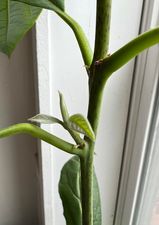
It is a new week, and we have a new portion! This week’s portion is “Mattot” which means both tribes and branches. Many of you who have been following me know that I have been growing an avocado tree from the pit. As I entered the current “segment” of my life in January of 2022, the avocado pit was something I felt called to plant. It has been an interesting journey since then, and as I transition into a new “segment” of my life this week, the avocado tree has started to grow its’ first branch.
I love how life connects in such amazing ways. Yesterday, I had the MOST amazing day. It was a day of branches of my life connecting in a single moment throughout the day. We often times look at the leaves in front of us without realizing how connected they are to the leaves around us.
Let’s dig into Mattot.
I want to spend a moment to dig deeper into the concept of silence which seems to be a theme in today’s portion. A year ago I wrote my commentary and it seemed to indicate how silence is problematic. And although that is true, it does not paint the fullness of the power of silence.
Because although silence is giving tacit approval to behavior – when the behavior is someone being vulnerable, sharing things they don’t share normally, silence is a beautiful healing balm (or salve) on past trauma and wounds. Because the silence creates space for our humanity to connect with others’.
How we wield our silence – whether we wield our silence intentionally or not – these are things we should be reflecting on.
These moments – where we can choose silence, or we can choose to engage, or we can choose to challenge – these moments create branches in the timeline – choices – that spread out throughout the “multiverse” for lack of a better word.
In my amazing journey yesterday, I met a woman who was elderly – and a greek orthodox nun. I asked if I could join her at her table in the coffee shop and she welcomed me. It was such a rich conversation – and a lot of it centered around time.
You see – both of us lived near Modesto, California back in 2006. When we discovered this, it was like meeting an old friend. We talked about how God (the Universe) exists outside of time. That the past, present, and future are all tied into a single moment for the universe. Time is a construct we have created as humanity – really as a way to measure change.
The beautiful human sitting with me shared how she moved to central New York “to die.” She had many health issues and was ready to go to heaven – and was waiting for that moment to arrive.
I shared – “but you aren’t dead – you still have purpose!” And that led us to an even deeper understanding of time.
What I learned in that moment is that time is really infinite. Regardless of “how long I have to live” this moment is here. And then the next moment will arrive. And the next. Infinitely – until there are no more moments. But at the point of our timeline where my body and consciousness cease to experience moments? Branches have already formed where my consciousness will live on.
Because this woman impacted me – so even after her body is no longer experiencing moments here on earth? Here consciousness lives within me – as a branch formed in Modesto, California back in 2006, flowering now in 2023 – 17 years later.
And I think THIS is the lesson of Mattot. Our silence. Our creating space. Our words. Our consciousness. They branch out into the universe in ways we do not know or understand.
What are your thoughts?
Here is my commentary from a year ago;
Tyler’s Torah Thoughts for 25 Tamuz, 5782
Good morning! As we begin a new week leading to the new moon on Thursday night, my hope is we continue our journey of seeing in the darkness of this particular month. Things don’t necessarily get much easier for us; and we will need to see with different eyes over the next two weeks leading to Tisha B’Av, which normally would start Friday night, August 5th, but because that is a Shabbat won’t happen until Saturday night, August 6th.
This weeks portion is “Mattot” which means both tribes/branches. A beautiful thought from the Chumash I am reading says this:
“Even now that your soul has descended to this world and is detached from overt revelation, like branches (“mattot”) cut from a tree, you can still worship God under all circumstances. In this way, your commitment will grow stronger, like a hardened branch.”
I think back to some of what we have been studying. I connect this with Aaron’s staff – which was an almond branch – that was here, and cut off; and still bloomed flowers.
I think back to our Haftarah portion yesterday where Jeremiah saw an almond tree.
I believe we are called to harden and be refined on this earth AND still produce fruit. That may be the key to seeing in the dark.
In addition, I read a “spiritual vitamin” that seems to be critical here:
“Your Judaism is actually intact deep inside of you, and it is entirely up to you to make it an integral and active ingredient of your daily life. You don’t have to look for it elsewhere; all you have to do is brush off those external layers that, for one reason or another, have covered your inner essence.”
Whether we recognize it or not, our souls are connected to Hashem. Our Neshama is our identity and who we really our. Our brains, our bodies; they are temporary. Our soul is what transcends time.
Interesting!
Todays portion is all about making vows.
When a person makes a vow to God or makes an oath to prohibit themselves, they may not violate their word and must act in accordance with whatever he uttered.
The Torah then goes on to address circumstances of the vow:
When a child makes a vow (while under the jurisdiction of her father’s house) if her father heard the vow and he remained silent their vows/oaths stand. If he hears it and vetoes it on the day he hears it, those vows/oaths do not stand.
When it comes to marriage, any vow made by a child – if the betrothed hears about it, and remains silent, the vow/oath stands. Otherwise, the betrothed can annul and revoke the vow.
Next, the vows of a widow or divorcee are addressed:
Anything a widow/divorcee forbids herself will stand because she is not under the jurisdiction of her husband or father.
If a married woman made a vow or banned something from within the husband’s house, then the husband has the veto options above (listed for the father and child).
I’d argue that the reverse is also true; if a husband made a vow and the wife hears it….
But here is something interesting- if the husband hears about it, and remained silent until the day after in the evening, he has ratified the vows. The Torah clearly says we ratify it because we remain silent.
This brings me back to something I learned at Sonoma State; “silence is giving tacit approval for others’ behaviors.” I believe this was from a book called “Other Esteem” that a colleague recommended.
It would seem that today’s overall theme is about silence. Regardless of how we might feel about the patriarchal language of the Torah. And the power dynamics we read, which in our current culture seem antiquated, we can take away this notion of silence and the roll it plays.
What are your thoughts?


No responses yet