Tyler’s Torah Thoughts for 17 Nisan, 5784 – Third Day of Passover – Day 2 of Omer
Parsha ‘Aharei Mot – “After the death”: (Leviticus 16:1 – 18:30)
Fifth Portion: Leviticus 17:8 – 18:5
 Passover Torah Portions: Exodus 13:1 – 16, Numbers 28:19-25
Good morning! It is the third day of Passover. The four “middle” days are intermediary days before we conclude Passover on the final two nights.
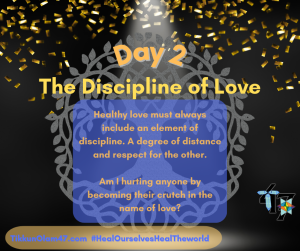
Today is also Day 2 of the Omer – the theme today is the “Discipline of Love.”
From Chabad:
Today is the Gevurah of Chesed. The discipline of love.
“Healthy love must always include an element of discipline. A degree of distance and respect for the other. An assessment of the persons capacity to contain your love. Love must be tempered and directed properly. Ask a parent who in the name of love has spoiled his child; or someone who suffocates their spouse with love and doesn’t allow her any space of her own. Love with discretion is necessary to avoid giving to those that don’t deserve it.
Is my love disciplined enough? Do others take advantage of my giving nature? Am I hurting anyone by becoming their crutch in the name of love? Am I hurting my children by forcing upon them my value system because I love them so? Do I respect the one I love or is it a selfish love? Am I sensitive to his feelings and attitudes? Do I see my beloved as an extension of myself and my needs? In my love is there as much emphasis on the one I love and his ability to contain my love as there is on me and my giving? Rain is a blessing only because it falls in drops that don’t flood the fields.”
These are critical questions to ask ourselves. And I’m reflecting on these answers within me:
Is my love for myself disciplined enough? Do I take advantage of my own giving nature? Am I hurting myself by becoming a crutch for others in the name of love? Am I hurting myself because I force upon my children my value system because I love them so? Do I respect myself or am I selfish? Am I sensitive to my own feelings and attitudes? Do I see myself as an extension of love? In my love is there as much emphasis on my ability to receive and contain love as there is on me and giving love to others?
These are good questions as we enter this intermediate time!
Let’s dig in! We left off yesterday with Hashem warning the Children of Israel to bring their slaughtered animals to the tent of meeting. He desired connection. Relationship. This is crucial.
8And you should say to them: Any man of the House of Israel or of the strangers who will sojourn among them, who offers up a burnt offering or [any other] sacrifice,
9but does not bring it to the entrance of the Tent of Meeting to make it [a sacrifice] to the Lord, that man shall be cut off from his people.
10And any man of the House of Israel or of the strangers that sojourn among them, who eats any blood, I will set My attention upon the soul who eats the blood, and I will cut him off from among his people.
11For the soul of the flesh is in the blood, and I have therefore given it to you [to be placed] upon the altar, to atone for your souls. For it is the blood that atones for the soul.
12Therefore, I said to the children of Israel: None of you shall eat blood, and the stranger who sojourns among you shall not eat blood.
So this is interesting isn’t it? All the offerings need to be done for Hashem. We should not eat blood.
If we ever questioned “Why did God give us blood?” We have the answer.
The soul is in the blood.
Sit with that.
Our soul is in our blood.
Full stop.
This is why we connect the HEART with our soul. The Heart is not where our soul is. The heart PUMPS the blood. It pumps the soul. Our heart beat literally pushes the soul within our bodies.
And.
It is given to atone for our souls.
13And any man of the children of Israel or of the strangers who sojourn among them, who traps a quarry of a wild animal or bird that may be eaten, and sheds its blood, he shall cover it [the blood] with dust.
14For [regarding] the soul of all flesh its blood is in its soul, and I said to the children of Israel: You shall not eat the blood of any flesh, for the soul of any flesh is its blood all who eat it shall be cut off.
This is interesting – the soul is in the blood – and the soul of all flesh – its blood is in its soul.
15And any person, whether a native or a stranger, who eats carrion or what was torn, shall immerse his garments and immerse himself in the waters, and shall remain unclean until evening, and then he shall become clean.
16But if he does not immerse [his garments] or immerse his flesh, he shall bear his sin.
So it is clear how blood is connected to our souls.
18:1And the Lord spoke to Moses, saying:
2Speak to the children of Israel, and say to them: I am the Lord, your God.
3Like the practice of the land of Egypt, in which you dwelled, you shall not do, and like the practice of the land of Canaan, to which I am bringing you, you shall not do, and you shall not follow their statutes.
4You shall fulfill My ordinances and observe My statutes, to follow them. I am the Lord, your God.
5You shall observe My statutes and My ordinances, which a man shall do and live by them. I am the Lord.
These last passages – they indicate our role is to be our own person and not take on the customs of others. We are to stand firm and not capitulate.
That is the message for us today.
What are your thoughts?
Here are my thoughts from two years ago:
Tyler’s Torah Thoughts for 13 Nisan, 5782
Todays portion concludes what happens to those who offer sacrifices but doesn’t bring them to the Tent of Meeting:
– that person will be cut off from his people – sometimes this gets interpreted as he will die prematurely and his children will die.
So basically; if we are going to sacrifice for Hashem – or for our friends, it sounds to me the Torah is clear; we should be doing it FOR THEM which means in a way THAT MATTERS to them. Again, if I make a sacrifice for a friend; but it doesn’t land with them; that’s on me. I should listen and understand their needs; and provide them with that- not what I believe. If this makes any sense?
Next, we move in to blood; eating it and covering it.
The Torah says this; if any man from Israel or from the converts who live among them eats any blood, God is going to devote His time with the soul who eats the blood and he will be cut off from among his people.
Why? Why does God take this so seriously? What’s a little blood? Fortunately, the Torah answers us:
Because the soul of every creatures body depends on its blood. This is why Hashem assigned blood to us to be placed on the altar to atone for our souls. It is the blood of an animal that atones for the soul of man.
Let’s stop here. Because I feel like this is a controversial statement – especially for those readers who identify as Christian. The Torah is very clear here; Leviticus 17:11. The blood of an animal atones for the soul of man. It’s not the blood of man that atones for the soul of man. Because we must ask ourselves a fundamental question with real implications – are we souls who live inside a body as a vessel? Or are we bodies with a soul inside of them? Which one are we? That question matters. Our true identity as a soul or a body is important.
And before you say “we are both” only one of those options exists when our bodies die. If we see a body with a soul in it, when we die, we are no more. If we are souls living inside a body? When we die, we continue life beyond this world. Our soul (the essence of who we truly are) lives on. This concept is crucial. And it is why the blood is so important! Our souls DEPEND on blood to survive on the earth. Without blood, our souls wouldn’t be here.
So if shedding of blood impacts our soul, it makes sense that the purpose of animals is to provide that blood for us. But not to nourish our souls – but to atone for our broken connection with Hashem.
Not only this, the Torah tells us that if we see a trapped animal – even if it is kosher that may be eaten – and that animal sheds it’s blood, we need to cover the blood with dirt (the earth).
Some interesting things written about these passages.
Maimonides writes about eating blood:
“This is to deter Jewish people from occult practices which involve blood, such as the Chaldean practice of attempting to summon demons by using pools of blood, or drinking blood in an attempt to enhance the power of prophecy. The Torah prohibits the consumption of blood, to guide the Jewish people away from such foolishness.”
A while later, Nachmanides adds to his writing:
“Since “the soul of (every creature’s) body (depends on its) blood” (v. 11), if a person eats the blood of an animal he will be influenced by the animal’s soul which will bestow animalistic characteristics upon him.”
This is interesting considering the Jewish concept of having two souls; the Neshama and the Animal soul. There is a practical reason for this.
This transitions us to learning the Torah about eating kosher animals that die on their own without being ritually slaughtered.
The Torah is quick to point out; merely touching blood doesn’t make us ritually impure. But if we eat the animal that died on its own, we are to immerse ourselves and then go into the mikveh – remaining unclean until evening.


No responses yet