Tyler’s Torah Thoughts for 8 Iyar, 5783. 23rd Day of the Omer.
Today’s theme is “Gevurah of Netzah” which means Discipline of Endurance.
From Chabad:
Examine the discipline of your endurance. Endurance must be directed toward productive goals and expressed in a constructive manner.
- Is my endurance and determination focused to help cultivate good habits and break bad ones?
- Or is it the other way around?
- Does my endurance come from strength or weakness?
- Does it come out of deep conviction or out of defensiveness?
- Am I ever tenacious out of stubbornness and an unwillingness to acknowledge errors?
- Am I invested in certain decisions and not prepared to review them?
- Do I use my endurance against itself by being tenacious in my lack of determination?
Exercise for the day: Break one bad habit today.
The big question for me is whether I am tenacious in my lack of determination?
Because sometimes? I am.
This morning I am reflecting on how determined I am NOT to be determined.
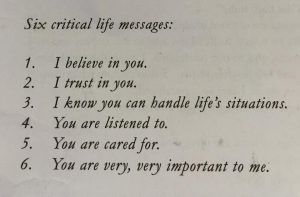
As we close out our Parsha for the week, I am struck by the image I posted a year ago.
How determined are we to live out this kind of love?
I wrote this commentary from a year ago:
Tyler’s Torah Thoughts for 5 Iyar, 5782
Today is the 20th day of the Omer; which is 2 weeks and 6 days!
Todays passage is going to be a little rough I think. We are going to get into more sex stuff with the Torah. We have to remember the goal; it was so the Jews did not take on the practices of either the Egyptians whom they were enslaved by, and the Canaanites who they’d be living with in the promised land.
Todays portion begins by saying “you should observe My suprarational commands and fulfill them, I am God who sanctifies you.”
So these commands may not make logical sense to us. That’s important. And; culturally, they may doubly not make sense since our culture today is not what was in the Torah. But let’s jump in:
- If you curse your mother or father – you should be put to death. Even if it’s after their death.
This is a tough one. Especially for those who grew up in a house that was abusive. In the Torah; the children would have been living more communally – so I’m wondering if the idea of abuse wouldn’t even have been a thing. With people living in tents, you’d hear everything and if parents started treating their children poorly, it would have been corrected.
- If a grown man commits adultery with another man’s wife, if the woman was the wife of a Jew, both should be put to death by strangulation.
Um. Yeah. This is again a tough one to swallow. The use of the word “grown” is interesting though. But here is what Rabbi Mordecai ha-Kohen writes:
“God orchestrates peoples lives in a way that everyone should meet the person whom they are destined to marry. When a man commits adultery, he not only betrays the woman’s husband, he also denies God, who “arranged” this marriage.”
Interesting.
- if a man lies with his fathers wife, it’s considering uncovering his fathers nakedness. Both of them should be put to death.
- If a man lies with his daughter-in-law, both of them should be put to death. They have committed a shameful act.
- If a man lies with a man as one would with a woman, both of them have committed an abominable act. They should both be put to death.
Let’s stop here. Because I feel like that last mitzvah is a really hurtful thing for many; especially those who I care and love deeply.
My first observation about these passages so far is how much our cultural focused on #5 and ignores #1 or #2. Culturally, #3 and #4 are pretty universal In our distaste for them.
But it is curious to me why we treat the act of sex between two men so much differently than the act of cursing your mother or father, or adultery. I’m not sure there is a good explanation TBH.
The other observation is that all of these mitzvahs are in the context of entering the promised land.
I have bad news. America isn’t the promised land. So these mitzvahs were really supposed to take place when we go to the promised land.
It’s important to understand the impact these words of the Torah have on our friends, family and neighbors. And how we are very quick to point some things out; and not others.
Kids curse their parents. I know as a kid I cursed my parents. To their face. I deserve to be put to death according to the Torah. Except I wasn’t in the promised land. I was still in Egypt. I still am in Egypt in certain ways. Who am I to condemn another?
I’m curious to other people’s thoughts on this. It’s a hard read.
But let’s continue:
- If a man takes a woman who is his mother-in law and her mother in marriage, it is the advice of the evil inclination, they should burn him and them in fire. But not his initial wife.
- A man who lies with an animal should be put to death and the animal should be killed.
- A woman who comes close to an animal so that it will mate with her, you should kill the woman and the animal.
- If a man takes his sister in marriage, either his fathers daughter or his mothers daughter and he sees her nakedness, and she sees his, it is a disgraceful act. They should be cut off from the sight of the members of their people.
It is interesting that we are moving away from killing and moving towards cutting off.
- If a man lies with a woman who is menstruating and uncovers her nakedness, he has exposed her source; the source of her blood. Both of them will be cut off from among their people.
So let’s be clear here. The Torah is saying; sleeping with a woman on her period is in the same category as sleeping with your sister. Not sure fundamentalists see those two things the same.
- Do not uncover the nakedness of your mother’s sister or your father’s sister for he has exposed his close relative. The will bear the consequence of their sin.
- If a man lies with his aunt, he is considered to have unconcerned his uncle’s nakedness. They will bear the consequences of their transgression – they will die childless.
- If a man takes his brother’s wife, it is a repulsive act. He is considered to have unconverted his brother’s nakedness. They will be childless.
And to reaffirm the context of all of these passages, todays portion reminds us:
“you should guard all My suprarational commands and all My rational commands and observe them.”
Let me stop and ask a question here: “Why, God? Why should we do this?”
God answers to close out the portion:
“Then the land, where I am bringing you to live, will not vomit you out.”
Given what we know about history, the Jews did not do this, because we were vomited out of the promised land. We aren’t living in the promised land any more. I guess if we were living in Israel, things would be different. But the truth is, we don’t live there.
So this was a tough portion today. I’m curious to what you think?
Tyler’s Torah Thoughts for 6 Iyar, 5782:
Shabbat Shalom! Today is the 21st day of the Omer, three weeks. It’s the last day of the theme of “compassion” for the Omer. At sundown, the theme transitions to “determination.” As we go about our day today, let’s focus on compassion- and not just for others. One of the hardest skills is to have compassion for ourselves. Give yourself some compassion today in how you are internally communicating. What stories are you telling yourself about yourself? Today, make an intention to tell yourself loving and kind things! As I posted earlier; tell your self:
- I believe in you!
- I trust in you!
- I know you can handle life’s situations!
- You are listened to!
- You are cared for!
- You are very, very important to me!
Tell yourself these things – even if you don’t yet believe them to be true!
And if you are struggling to believe these things, talk to me! Send me a DM! I’m glad to help!
Ok! Let’s dig into the final portion of this week’s Torah Parsha!
This week as been tough reading the Torah. A lot of ideas and concepts that challenge our feelings about our current reality and culture. But the portion ends with a reminder of why we are being given these mitzvahs:
“You should not follow the practices of the nation that I am driving out before you, for they committed all these, and I was disgusted with them. That is why I said to you: You should possess their land, and I will give it to you so that you can inherit it. It is a land flowing with milk and honey.”
It is important to note; the promised land that God was giving the children of Israel was inhabited. This was not a land that was waiting for the Jews to live in it.
We have to own the fact, that we drove people from their homes in order to live in the land Hashem promised us. And we have to own, from various perspectives, that’s going to be seen as imperial. Yes, we can see Hashem’s authority in doing this; but for those who don’t recognize His authority, the idea of people being driven out of their homes so that the Jews could possess it? Highly problematic. Even if the Jews were slaves before.
And we have recent history to guide us on this. After the holocaust, the Jews were given Israel. And people who were living there lost their homes; they were given the option to stay, but still the homes they grew up in would fundamentally be changed forever.
In this time of compassion; we need to turn our eyes to this idea. That those who were living in the land before the Jews possessed it – both in the Torah and today- had their lives disrupted. We can be compassionate towards them. And. At the same time, have compassion for ourselves. We have the capacity for both.
The closing of the portion is God reminding the Jews by summarizing the mitzvahs: distinguish between pure animals and impure, birds that are pure and those that are impure.
Then Hashem tells the Jews; be holy (separated) to God because “I, God, am holy, and I have distinguished you from the nations, to be Mine.”
And one final mitzvah:
“A man or woman who practices (the sorcery of the ‘ov or yidde’oni should be put to death.”
Ok. So this leaves the question. What is ‘ov and yidde’oni?
To be fair to the question, I want to present two sides to the idea. Here is a perspective that may be unique – about witchcraft and Judaism:
https://www.jewitches.com/…/can-you-even-be-a-jewish-witch
I’m not endorsing this by any means; but I’m a fan of providing alternative viewpoints and letting each of us make the decision for ourselves. It’s certainly interesting. The article interprets this verse as follows:
“Leviticus 19:31 states, “Do not turn to the idols called ov or yidoni.”
This is a very specific act. So, could a witch simply not put a bird in her mouth, burn incense, say those words, and be fine?”
So this practice involves putting a bird in one’s mouth and burning incense.
Chabad seems to agree with the idea of what the yidde’oni is:
https://www.chabad.org/…/jewish/Negative-Commandment-9.htm
So there you have it. A fascinating look at todays Torah portion!
What are your thoughts?
As always on Shabbat, the Haftorah thoughts will be in the comments below!
Haftorah thoughts:
Ashkenazi Jews read Ezekiel 22:1-16, Sephardic Jews and Chabad reads Ezekiel 20:2-20
The Haftorah follows the Parsha this week with the theme of following the mitzvahs “so we may live.” The Haftorah is a historical review of Israel’s past- spanning many time periods.
We are going to see how God preserves the Jewish people not because we are “better than other nations” but really so that His Name would not be profaned.
Let’s start in Ezekiel 20:2:
The word of God comes to Ezekiel and tells him to talk to the elders and shut down their petition to God; “have you come to petition Me in prayer, to save Jerusalem? As I live, I will not let you petition me!”
God won’t even let them approach Him with a petition to save Jerusalem.
God tells Ezekiel- if you need to debate with them, remind them of their ancestors’ abominations in addition to their own sins.
God is saying, Israel isn’t worthy. They have walked away and done what is right in their own eyes; not in the eyes of God.
God tells Ezekiel how he should debate with the elders:
- God chose Israel when we were slaves in Egypt.
- God took an oath to the descendants of Jacob.
- That oath was “I am God, your God, who guides you personally.”
Let’s stop here. God made an oath to guide us personally.
How is He doing that in your life?
Ok back to the passage:
- God swore to take them out of the land of Egypt and into a land flowing with Milk and Honey.
So those were the four things God promised. And here is what He asked for in return:
- Discard the detestable things which your eyes attract you to!
- Do not contaminate yourselves by following after the idols of Egypt. If God is our God, How could we trade Him for idols?
And then God has Ezekiel argue with the elders:
While still in Egypt, we rebelled against God. We did not want to listen to Him. And God was ready to pour out His anger on us. But He stopped. Why?
God says “I acted for the sake of My name: so it would not be profaned in the eyes of the nations where they lived.”
So God acts on our behalf not because we are “good” and “don’t sin.” In fact He knows we will. He acts on our behalf because of His name; He wants the nations to know He is God! So He rescued us from Egypt.
But then our sin continues after leaving Egypt. God gives us rational and suprarational commands. And He even points out – “the rational commands you understood were at least for your benefit and yet you still didn’t obey.”
And once again, God acted in our behalf not because of what we did. But because of His name.
And after the spies went into the promised land and sinned; God says “Even though they deserved to be destroyed, I had pity on them, so I did not wipe them out in the desert.”
So in this first Haftorah passage, the message is very much in line with the theme of compassion. We do not deserve God to act on our behalf. We are not Better than other nations. God acts for us because of His name. That’s crucial. We need to have self compassion because Hashem understands us.
The next portion of Haftorah (read by Ashkenazi Jews) follows a similar pattern. Ezekiel 22:1-16 lays out the case against Jerusalem and the many sins of the current times.
The conclusion is the same as it ends with this:
“13 “I clapped My hands in distress over the fraud you have committed and over the innocent blood spilled in your midst. Will your heart endure and your hands remain strong to fight in the days of recompense which I am preparing for you? I, God have spoken, and I will act! IS I will scatter you among the nations and disperse you among the lands, and I will eliminate your impurity from you. You will be profaned in the eyes of the nations, and you will know that I am God.”


No responses yet